
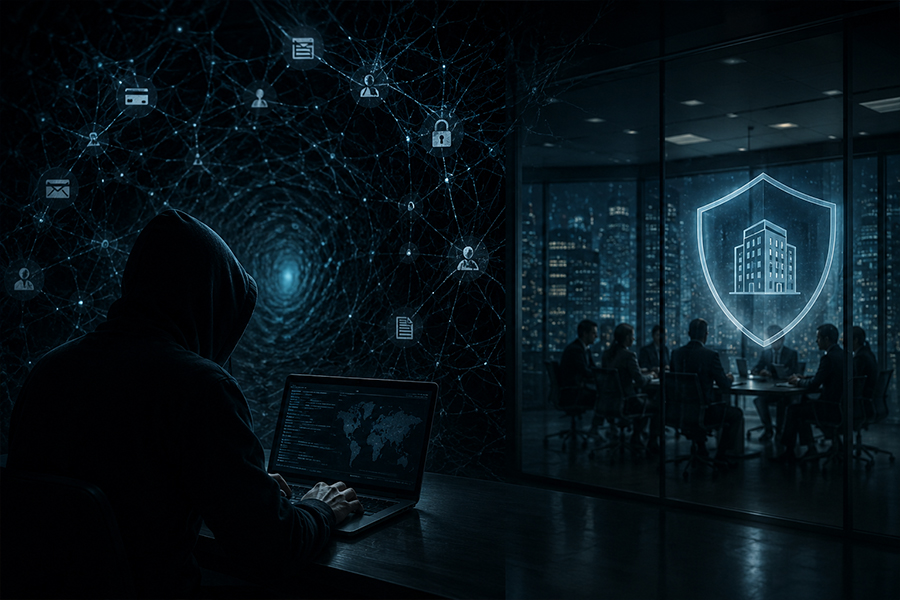
The internet most people use every day is only a small part of what actually exists online. Beneath the websites indexed by search engines like Google sits a hidden layer of the internet known as the “dark web” a place often associated with cybercrime, stolen data and anonymous activity.
While the term sounds dramatic, the dark web is a very real concern for businesses of all sizes, especially when it comes to protecting passwords, customer data and company accounts.
In this guide, we’ll explain what the dark web is, how stolen information ends up there and why proactive monitoring is becoming an important part of modern cyber security.
What Is the Dark Web?
The dark web is a hidden part of the internet that cannot be accessed through normal web browsers like Chrome, Safari or Edge. Instead, it requires specialised software and networks to access anonymously.
Unlike the “surface web”, the websites you can search and visit publicly, the dark web is intentionally hidden and unindexed.
Not everything on the dark web is illegal. Some people use it for privacy reasons or secure communication. However, it has also become a major marketplace for cybercriminal activity, including:
- Stolen usernames and passwords
- Credit card details
- Personal data
- Business login credentials
- Hacked databases
- Malware and ransomware services
This is why businesses are increasingly concerned about whether their information has appeared there.
How Does Business Data End Up on the Dark Web?
Most businesses don’t realise their information has been exposed until after an issue occurs.
Data can end up on the dark web through:
Phishing Attacks
Employees may unknowingly enter passwords into fake login pages or malicious emails.
Data Breaches
If a platform or supplier your business uses suffers a breach, employee login details may be leaked.
Weak Passwords
Reused or simple passwords make it easier for attackers to gain access to accounts.
Malware Infections
Malicious software can steal browser passwords, financial details and business credentials silently in the background.
Once stolen, this information is often sold or shared on dark web marketplaces.
Why the Dark Web Matters to Small Businesses
Many smaller businesses assume cybercriminals only target large corporations. In reality, small and medium-sized businesses are often seen as easier targets because they may have fewer security controls in place.
If compromised credentials are discovered on the dark web, attackers may attempt to:
- Access business email accounts
- Log into Microsoft 365 or Google Workspace
- Target financial systems
- Launch phishing attacks from your domain
- Access customer information
- Install ransomware
In many cases, businesses are unaware anything has happened until damage has already been done.
Signs Your Business Could Be at Risk
Some common warning signs include:
- Employees receiving unusual password reset emails
- Suspicious login attempts
- Unexpected MFA prompts
- Increased spam or phishing emails
- Locked or compromised accounts
- Customers reporting strange emails from your business
Even without obvious signs, exposed credentials may already be circulating online.
What Is Dark Web Monitoring?
Dark web monitoring is a cyber security service that scans known dark web sources and breach databases for compromised business information.
This typically includes:
- Email addresses
- Passwords
- Employee credentials
- Domain-related breaches
- Customer account exposure
The goal is to identify compromised information early so businesses can take action before attackers exploit it.
Woodstock IT’s Dark Web Monitoring Service
At Woodstock IT we offer a dedicated Dark Web Monitoring service designed to help businesses identify compromised credentials and potential cyber threats before they escalate.
Their service continuously monitors for exposed business information linked to your organisation and alerts you if details are discovered within known breach sources or dark web marketplaces.
This allows businesses to act quickly by:
- Resetting compromised passwords
- Securing affected accounts
- Enforcing stronger authentication
- Reducing the risk of unauthorised access
- Improving overall cyber security awareness
For many businesses, dark web monitoring acts as an additional layer of protection alongside services such as managed IT support, endpoint security and Microsoft 365 protection.
How Businesses Can Reduce Their Risk
While no business can eliminate cyber threats entirely, there are several important steps that significantly reduce risk.
Use Strong Unique Passwords
Avoid reusing passwords across platforms and encourage employees to use password managers.
Enable Multi-Factor Authentication (MFA)
MFA provides an extra layer of security even if passwords become compromised.
Keep Systems Updated
Regular updates help close security vulnerabilities attackers may exploit.
Train Staff Regularly
Cyber awareness training helps employees recognise phishing attempts and suspicious behaviour.
Monitor for Exposure
Services like dark web monitoring help identify problems early before they become larger incidents.
The Importance of Being Proactive
Cyber security is no longer just an issue for large enterprises. Businesses of all sizes now rely heavily on cloud systems, email platforms and online accounts, making proactive protection essential.
The dark web may be hidden from normal internet users, but the risks connected to it can have very visible consequences for businesses.
By understanding how data breaches happen and implementing monitoring and security measures early, organisations can reduce risk, protect sensitive information and improve resilience against modern cyber threats.
Need Help Monitoring Your Business Data?
If you want to understand whether your business credentials may already be exposed online, Woodstock IT’s Dark Web Monitoring service can help provide visibility and early warning against potential cyber threats.